
Rome Audio Walking Tour: Trastevere to the Colosseum
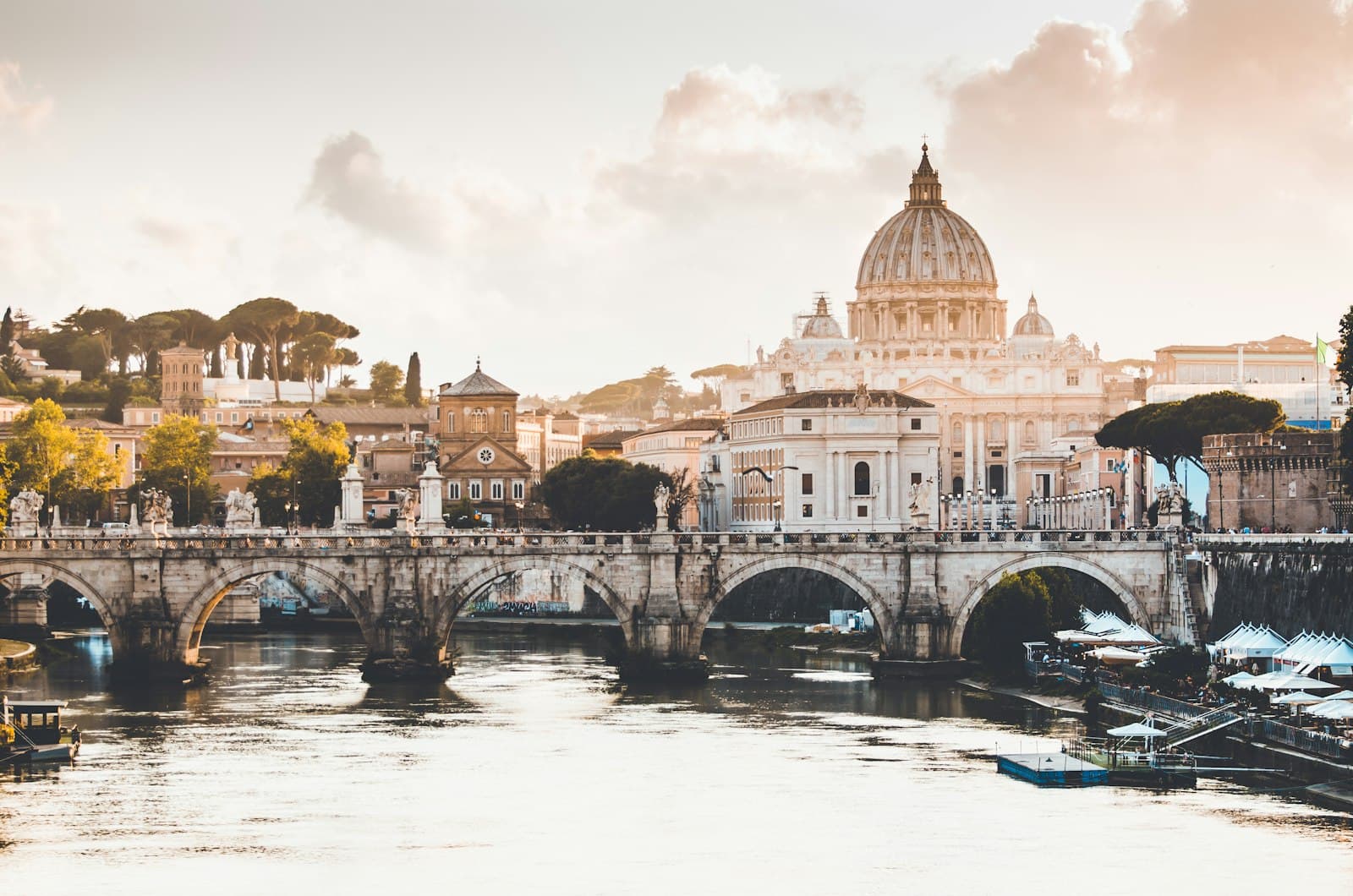
A Rome audio walking tour from Trastevere to the Colosseum is one of the best ways to experience the Eternal City on foot. This self-guided route takes you through cobblestone lanes, across the Tiber, past ancient temples, and into the heart of imperial Rome — all while a knowledgeable voice in your ear brings every corner to life. Here's exactly what the walk looks like, stop by stop.
Why an Audio Walking Tour Beats a Group Tour
Group tours move at someone else's pace. You're herded past the Pantheon in twelve minutes, then spend twenty standing around while your guide collects headsets. An audio walking tour flips the script entirely. You press play when you're ready. You pause when a street musician catches your ear or when you spot the perfect cornetto at a bakery you weren't expecting.
Self-guided audio tours also let you walk at your own speed. Traveling with someone who has mobility concerns? No problem. Want to sprint through the Roman Forum because you've been three times? Go ahead. The audio adapts to your rhythm, not the other way around.
With Travee's audio guides, the narration is generated specifically for your interests — history buffs get deeper dives into ancient Rome, and foodies hear about where to eat along the way. It's like having a local friend walking beside you.
The Route: Trastevere to the Colosseum
This walk covers roughly 4 kilometers and takes about 3 to 4 hours at a comfortable pace, including time to linger. You'll cross the Tiber River, pass through some of Rome's most storied neighborhoods, and end at the most iconic amphitheater ever built.
Here's the route, broken into 10 stops. Each one includes a preview of what you'd hear on the actual Travee audio guide.
Stop 1: Piazza di Santa Maria in Trastevere
What you'll hear: The story behind one of Rome's oldest churches — and the legend of the miraculous oil spring that erupted from the ground on the night Christ was born. The glittering 12th-century mosaics on the facade are best appreciated in the morning light, when they practically glow against the piazza's warm ochre buildings.
What to look for: Stand in the center of the piazza and face the church. Notice how the fountain in front of it is one of Rome's oldest — it's been here since the 8th century in some form. Locals still gather here every evening, sitting on the fountain steps with wine and conversation. This is Trastevere in its purest form.
Stop 2: Via della Lungaretta
What you'll hear: How Trastevere got its name (it literally means "across the Tiber") and why this neighborhood has always had a rebellious, independent streak. For centuries, Trasteverini didn't even consider themselves Roman — they were their own thing.
What to look for: As you walk this narrow street, glance up at the ivy-covered facades and the laundry strung between buildings. Duck into the small alimentari shops if you want to grab supplies for a picnic later. The street opens up as you approach the river.
Stop 3: Ponte Cestio and the Tiber Island
What you'll hear: The remarkable story of Isola Tiberina, the tiny island in the middle of the Tiber that's been associated with healing for over 2,000 years. In ancient times, a temple to Aesculapius (the god of medicine) stood here. Today, there's still a hospital on the island — the Fatebenefratelli — continuing a tradition that stretches back to antiquity.
What to look for: As you cross Ponte Cestio, pause halfway and look down at the island. Its shape was once sculpted to look like a ship, and you can still see fragments of the ancient travertine "prow" on the southern tip if you know where to look.
Stop 4: Teatro di Marcello
What you'll hear: How this 1st-century BC theater was Julius Caesar's ambitious project, completed by Augustus, and could hold 20,000 spectators. It's the building that looks like a mini-Colosseum, and that's no coincidence — the Colosseum's architects studied this design. The twist? People have been living in apartments built into the upper arches since the Renaissance. Yes, there are residents up there right now.
What to look for: Stand across the street for the best view. Count the two visible levels of arches — Doric on the bottom, Ionic above. The medieval and Renaissance additions on top create one of Rome's most surreal architectural mashups.
Stop 5: Piazza Venezia and the Vittoriano
What you'll hear: Romans call it "the wedding cake" or "the typewriter" — the massive white marble monument to Italy's first king, Victor Emmanuel II. Love it or hate it, the Vittoriano offers one of Rome's best panoramic views — the side terraces are free, but the top rooftop terrace requires the "Roma dal Cielo" panoramic elevator, which costs around €17. You'll hear why many Romans find the building a bit much, and the story of the Unknown Soldier whose tomb burns eternally at the base.
What to look for: This is a good moment to orient yourself. From the Vittoriano terrace, you can spot St. Peter's Basilica, the Colosseum, the Forum, and the Quirinal Palace. It's Rome's best geography lesson.
Stop 6: Imperial Forums — Via dei Fori Imperiali
What you'll hear: How Mussolini bulldozed an entire medieval neighborhood to build this grand boulevard between Piazza Venezia and the Colosseum in the 1930s. Beneath your feet lie unexcavated ruins from the forums of Caesar, Augustus, Trajan, and Nerva. You'll hear what each forum looked like in its prime and why Trajan's Column — still standing — tells one of history's greatest war stories in a 200-meter spiral of carved marble.
What to look for: On the left side of the road (heading toward the Colosseum), peer down into the excavated sections of Trajan's Forum and Trajan's Market. The semi-circular brick complex was essentially an ancient shopping mall.
Stop 7: The Roman Forum Overlook
What you'll hear: Rather than going inside (save that for a dedicated visit), the audio guide takes you to a perfect vantage point where you can see the Forum spread out below. You'll hear about daily life in ancient Rome — where senators argued, where merchants traded, where triumphal processions marched. The Temple of Saturn, the Arch of Septimius Severus, the House of the Vestal Virgins — all narrated from above.
What to look for: Find the three remaining columns of the Temple of Castor and Pollux. They're among the most photographed ruins in Rome, and the story of why they're standing involves a mythical cavalry charge and twin demigods.
Stop 8: Arch of Constantine
What you'll hear: The fascinating scandal of this triumphal arch — much of its decoration was stolen from earlier monuments. Constantine's builders literally pulled reliefs off structures honoring Trajan, Hadrian, and Marcus Aurelius and slapped them onto this arch. Art historians have been debating what this means for centuries. Was it laziness, a political statement, or a deliberate artistic choice?
What to look for: Stand facing the arch with the Colosseum behind you. Compare the round medallions (Hadrianic, 2nd century) with the narrow frieze below them (Constantinian, 4th century). The difference in artistic quality tells the story of Rome's evolution — or decline, depending on who you ask.
Stop 9: The Colosseum Exterior
What you'll hear: Before you go inside, the audio guide walks you around the exterior. You'll hear how 50,000 spectators were seated in under 15 minutes using a ticketing system (called tesserae) that modern stadiums still haven't improved upon. You'll learn about the velarium — a massive retractable awning operated by sailors from the imperial navy. And you'll hear the sounds: the roar of the crowd, the clanking of the gates, the animals growling below the arena floor.
What to look for: Find the holes pockmarking the exterior walls. Those aren't age — they're from medieval Romans who extracted the iron clamps holding the blocks together. The Colosseum was Rome's biggest quarry for centuries.
Stop 10: Inside the Colosseum (Optional Extension)
What you'll hear: If you have tickets for the interior, the audio guide continues inside with stories of gladiators, naval battles (yes, they flooded the arena), and the underground hypogeum where animals and fighters waited in darkness before being elevated into the arena on mechanical lifts. You'll hear the true story of whether gladiators really said "those who are about to die salute you" — the answer might surprise you.
What to look for: Stand at the arena level and look down into the exposed hypogeum. The maze of corridors and chambers below is where the real drama happened before anyone stepped into the sunlight.
Practical Tips for This Walk
When to go: Start between 8 and 9 AM. Trastevere is quiet and beautiful in the morning, and you'll reach the Colosseum area before the worst of the midday crowds.
What to wear: Comfortable walking shoes with good grip — Roman cobblestones (sampietrini) are beautiful but uneven. Layers work well since you'll move between shaded alleys and sun-exposed piazzas.
Water and snacks: Fill a water bottle at any of Rome's nasoni — the small iron fountains with running water scattered throughout the city. The water is fresh, cold, and perfectly safe to drink.
Getting back: From the Colosseum, Metro Line B takes you anywhere in the city in minutes. Or, if your legs still have life in them, the walk back through the Forum neighborhood to Campo de' Fiori is gorgeous in the late afternoon light.
Ready to Walk This Route With Audio?
This is just a preview. The full Travee audio guide brings every stop to life with richer stories, local tips, and narration tailored to what you care about most. It works offline, so you don't need to worry about data roaming, and it adjusts to your pace automatically.
Plan my trip to Rome with Travee and get a personalized audio walking tour generated just for you. Tell the AI what you're into — ancient history, street food, architecture, photography — and it builds a route and narration that fits your style.
The Eternal City has been telling stories for nearly 3,000 years. It's time you heard them the right way — one step at a time.